
 HOTLINE:+8613974960765 +8618507312158 HOTLINE:+8613974960765 +8618507312158


— Knowledge —
— PRODUCTS —
 Service Hotline +8613974960765
Email:susie@hnljpump.com
Mobile:+8618507312158
TEL:+8613974960765
vertical turbine pump
Publication date:2025/11/29 23:40:30 popularity: [content:visits]
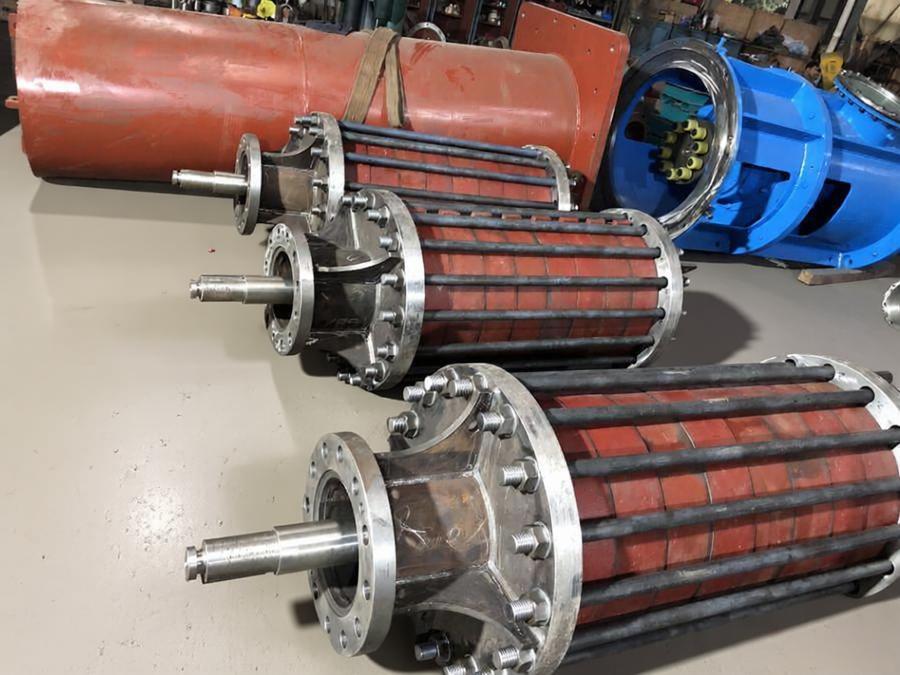
The material selection for the LDTN vertical multi-stage cartridge bag condensate pump (Turbine Pumps) directly determines the equipment's resistance to cavitation, corrosion, and high temperatures. It is a crucial aspect in ensuring long-term stable operation of the vertical multi-stage cartridge bag condensate pump (condensate Turbine Pumps) and avoiding unplanned downtime. Material mismatch under different operating conditions can directly lead to serious failures such as impeller erosion, shaft sleeve corrosion and fracture, and shell leakage. Scientific material grading and selection can increase the mean time between failures (MTBF) of the vertical multi-stage cartridge bag condensate pump (condensate Turbine Pumps) from 12 months to over 36 months.
1. Conventional thermal power plant clean condensate water scenario
Selection logic: The medium is pure condensate water with a temperature below 80°C, containing only trace amounts of dissolved oxygen and being non-corrosive. Priority is given to selecting a cost-effective combination of basic materials to balance procurement costs and service life.
Standard configuration: The outer cylinder is made of ductile iron, the impeller and guide vane are made of 304 stainless steel, the pump shaft is made of 45# chrome steel, and the guide bearing is made of graphite-filled fluoroplastic.
· Actual Effect: The equipment has operated continuously for 24 months without any visible signs of cavitation, with vibration values consistently below 3.5mm/s. It fully meets the continuous operation requirements of 300MW to 1000MW thermal power generating units, and the procurement cost is reduced by 40% compared to a fully stainless steel configuration.
2. Scenario of slightly corrosive high-temperature condensate water in chemical industry
Selection logic: When the medium temperature exceeds 100°C and contains trace amounts of chemically corrosive ions, pitting corrosion may occur in ordinary 304 stainless steel after long-term operation, necessitating an upgrade of the flow passage component material.
Upgrade configuration: All flow-through components have been replaced with 316L low-carbon stainless steel, the outer cylinder is made of cast steel with an anti-corrosion coating, and the shaft sleeve has been upgraded to 2Cr13 stainless steel.
· Actual case: A process condensate water recovery project at a 10-million-ton refinery in Shandong previously used ordinary 304 material LDTN pumps, which suffered from pitting corrosion and perforation of the impeller after just three months of operation. After upgrading to 316L full-flow components, the equipment has been continuously operating for 36 months without corrosion damage, and the condensate water recovery rate has increased from 65% to 98%, resulting in annual comprehensive benefits exceeding 5 million yuan.
3. Transportation scenario of petrochemical low-temperature easily vaporizable medium
Selection logic: For conveying low-temperature and easily vaporizable media such as -40℃ ethylene and propane, which not only vaporize easily at low temperatures but also exhibit slight hydrocarbon corrosion, ordinary materials are prone to brittle fracture at low temperatures. Therefore, it is necessary to select high-strength, low-temperature resistant, and corrosion-resistant materials.
High-end configuration: All overflow components are made of duplex stainless steel 2205, the outer cylinder is made of low-temperature cast steel, the pump shaft is upgraded to duplex stainless steel, and the mechanical seal adopts silicon carbide friction pairs.
Benchmark case: The 1.2 million tons/year ethylene project of Sinopec Tianjin Nangang selected the LDTN derivative VS6 bag pump configured with this material, which fully complies with the API610 international standard. The equipment has been operating continuously without any malfunction, completely breaking the monopoly of imported equipment. The procurement cost is reduced by 40% compared to imported products, and the delivery cycle is shortened by 60%.
4. Special working conditions for high-hardness and high-impurity condensate water
Selection logic: For captive power plants in industries such as metallurgy and paper-making, the condensate water contains a large amount of fine solid particles. The wear rate of ordinary stainless steel impellers is high, and a significant decline in efficiency can be observed after just three months.
· Wear-resistant configuration: The surfaces of the impeller and guide vane are sprayed with tungsten carbide wear-resistant coating, with a coating thickness of 0.3~0.5mm and a surface hardness of HRC65 or above. The guide bearing adopts a hard alloy inlay structure.
· Actual measurement results: The equipment's resistance to particle erosion and wear has been improved by 3 times, with an efficiency decay rate of less than 3% after 24 months of continuous operation. There is no need to frequently replace the flow passage components, resulting in a 70% reduction in annual maintenance costs.
⚠️ Core experience in avoiding pitfalls in material selection
00001. It is prohibited to blindly choose all-stainless steel configuration in conventional thermal power water purification scenarios, as this will unnecessarily increase procurement costs by 60%. The combination of ductile iron and 304 stainless steel flow passage components can fully meet the requirements.
00002. In chemical corrosion scenarios, it is prohibited to substitute stainless steel with ordinary carbon steel plus anti-corrosion coating. Once the coating is locally washed away by the medium, it will quickly lead to corrosion and perforation of the shell, resulting in medium leakage safety accidents.
00003. For low-temperature conditions, it is necessary to use outer cylinders made of low-temperature cast steel. Ordinary carbon steel will undergo low-temperature brittle fracture at temperatures below -20℃, potentially leading to serious equipment safety accidents.
The shaft material must be chrome steel that has undergone quenching and tempering heat treatment. It is prohibited to directly process the pump shaft using ordinary 45 steel. Under long-term variable load operation, shaft fracture is prone to occur, potentially leading to major equipment accidents.
Related Recommendations

Service hotline
screenshots ,WeChat Scan the Qr Code
WeChat:ljpump6666